
Major Over Minor
Miles Runs the Voodoo Down

Miles Davis looms large in my imagination. For his 100th birthday, I’m writing a series of posts about things that fascinate me. I’ve written about Miles’s relationship with J.J. Johnson, and about how sometimes he reused material in solos. This one is about harmony.
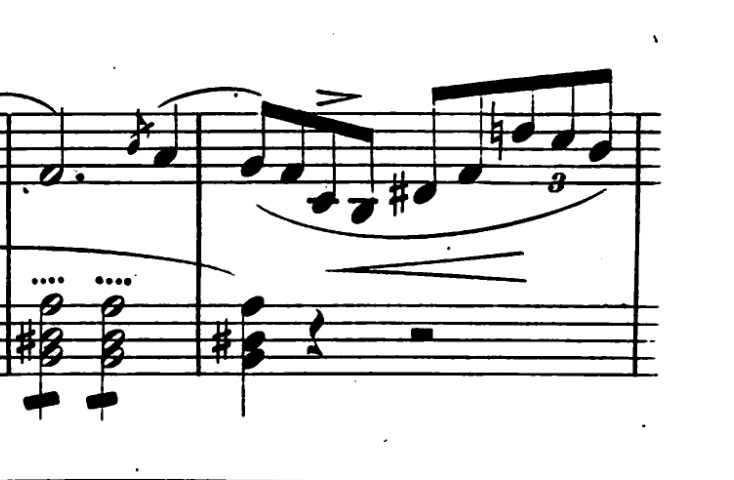
Minor over major has a long history in music. Used in functional harmony, it was a way to heighten tension in a cadence. In this B 7 chord from Chopin’s Prelude in E Minor (1839), the D natural, occurring so soon after the D#, gives it a yearning, sorrowful sound.
By the impressionist era this sound no longer was tethered to a dominant chord as part of a cadence. It could stand on its own as a striking sonority, as in Debussy’s Feuilles Mortes, from Préludes book II (1913).
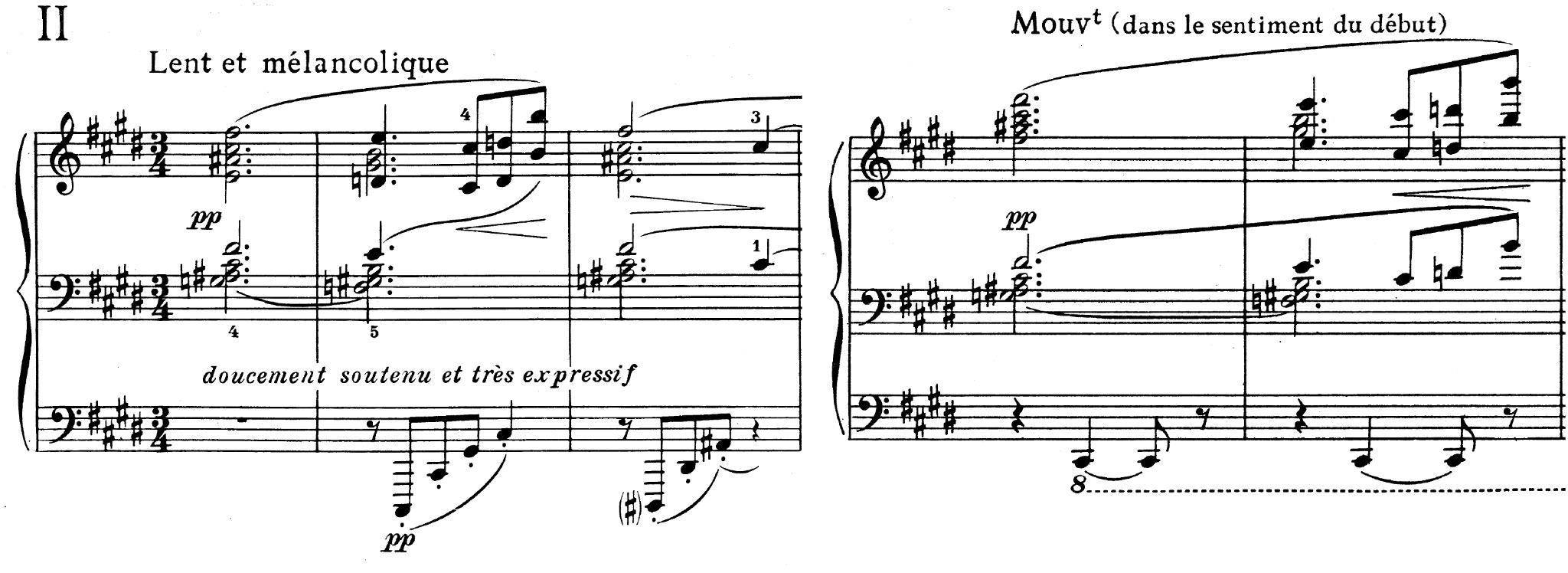
In the second bar, the C# 7 has a major third (spelled F natural but really E#) and above it a minor third (E natural).
Stravinsky’s music is chock full of these sounds. He uses a nearly identical formation at the beginning of “The Ritual of the Abduction” from the Rite of Spring (1913). It’s a C 7 chord with an added Db and Eb (the minor third aka #9). This type of sonority occurs throughout the ballet.
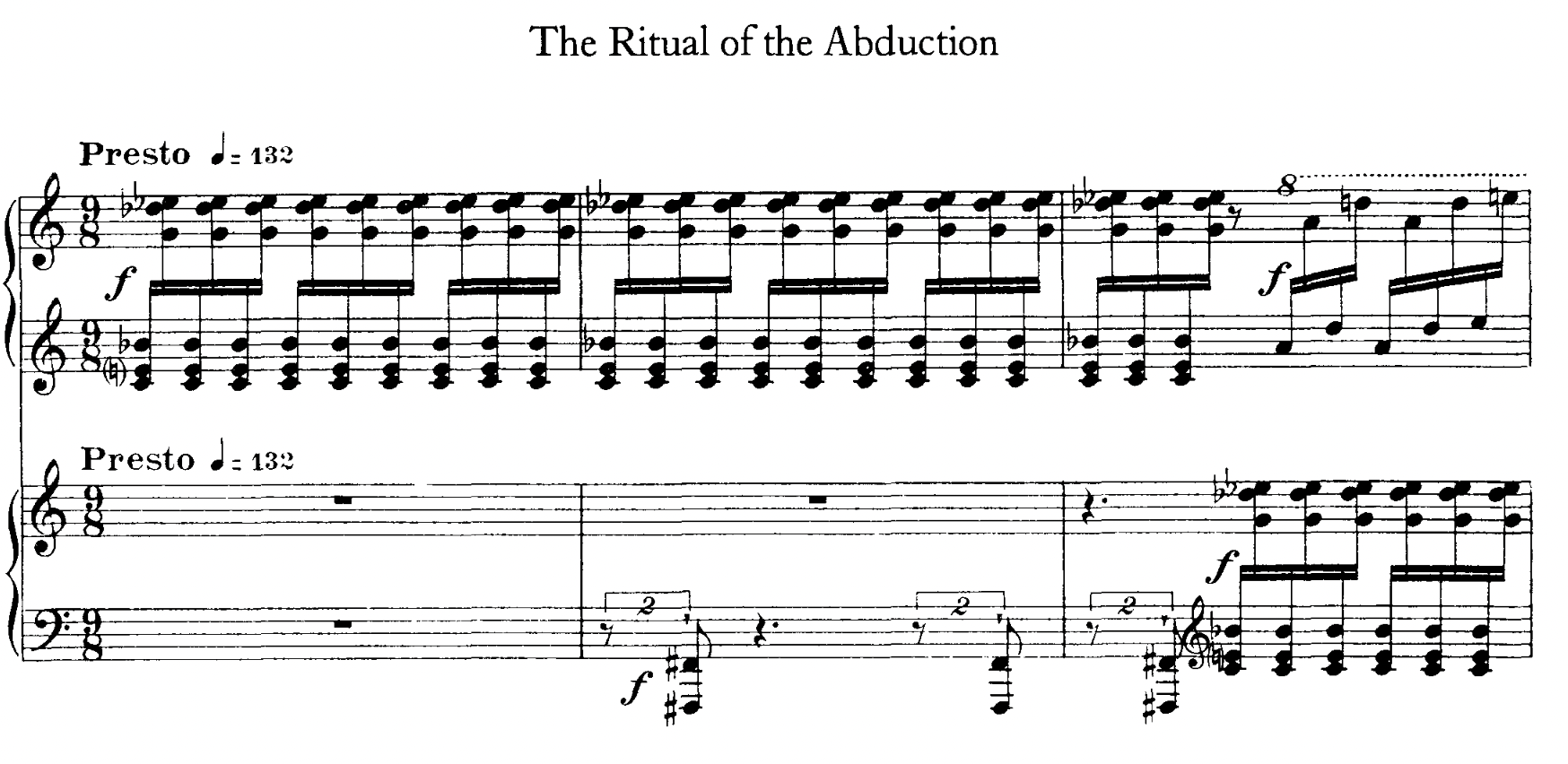
Any trained musician will recognize these types of chords as the ubiquitous “Hendrix Chord”, so named because it occurs at the beginning of Foxey Lady. The Beatles called it the Gretty chord, named after a teacher who showed it to them. Any jazz musician will recognize it as the widely used “sharp nine” chord, common since the early days of jazz. It is one of the essential sounds of the blues, and every guitar player who strummed an E 7 chord and sang a wailing G over it achieved the same harmony, whether they knew the name of it or not. Any 6th grader testing out the blues scale in middle school jazz band, overlaying those minor thirds over the rhythm section’s dominant chords, is partaking in this tradition. In nearly all these formations, 6th grade blues tuba solos notwithstanding, the minor third (aka #9) occurs over the major third.
Stravinsky, always ahead of the curve, had a predilection for an even more delectable version of this sound. Perhaps this was because he started to gravitate towards harmony that was beyond his early mentor Debussy, or because he had a wonderful taste for the awkward and uncanny, an audio version of the unsettling effect of off-kilter eyes in a portrait by his colleague Picasso. In pieces like the Symphony of Wind Instruments (1920), he deployed the more unusual major over minor chord.
Although the lowest note here is an F, I perceive it as a G chord because of the strong octaves and fifths at the opening. It’s G major with a high B natural over the lower Bb. Major over minor. Bright over dark. It inverts the Chopin yearning sound.
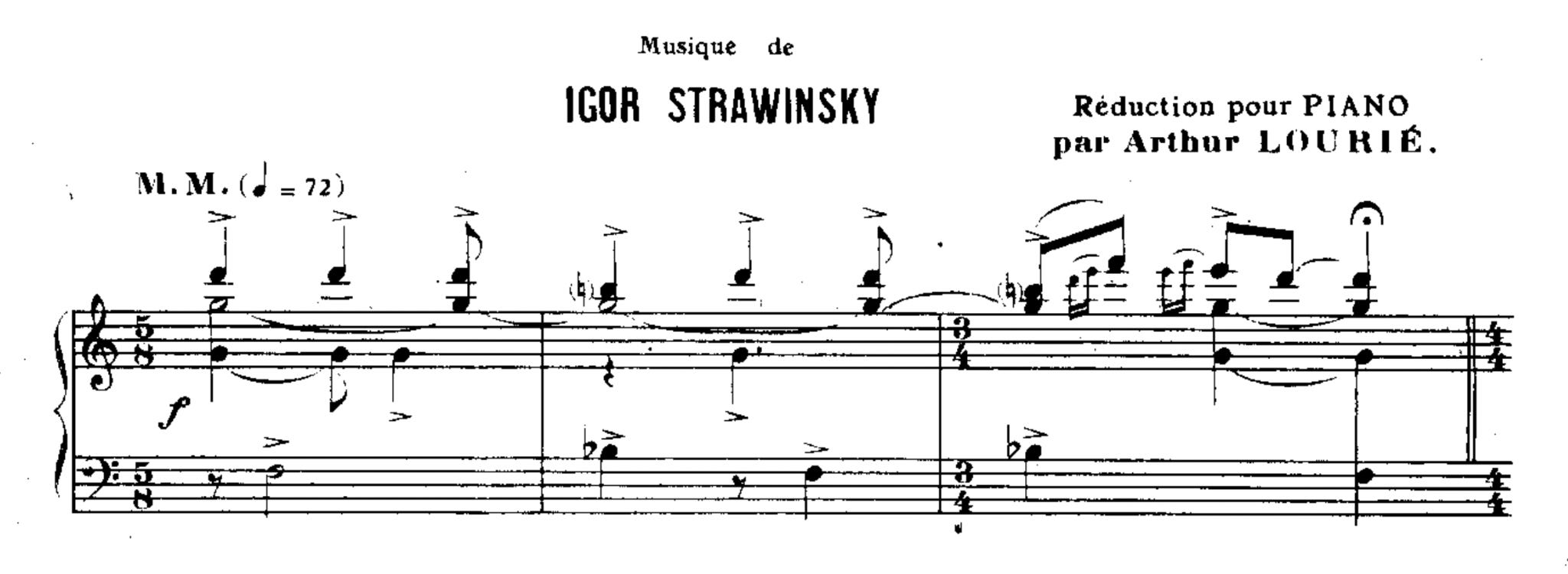
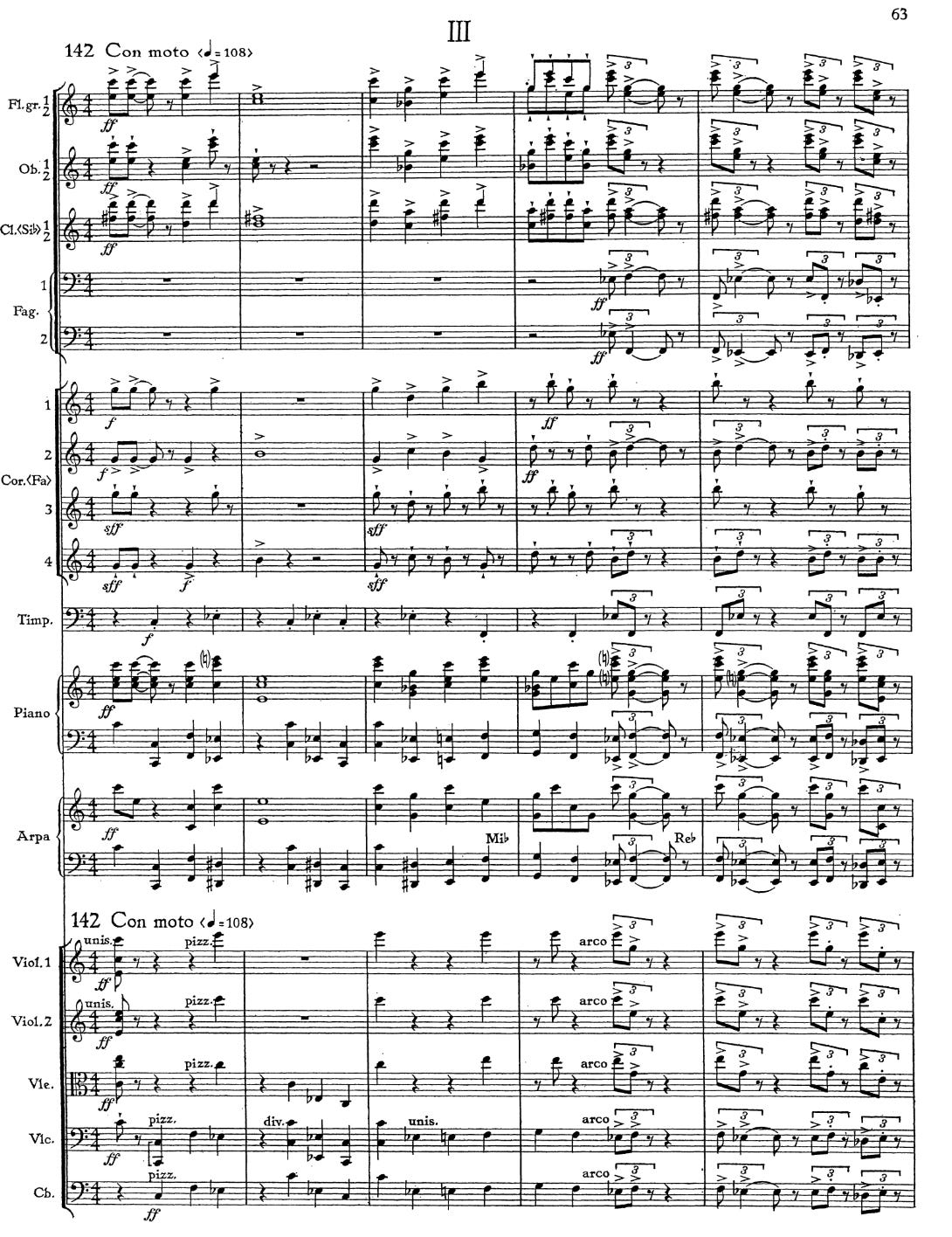
Here it is again, in the key of C, at the beginning of the third movement of Stravinsky’s Symphony in Three Movements (1945).
This type of sound is not confined to classical music. Eastern European music is full of major/minor sonorities, often minor over major but sometimes the reverse too.
In the Serbian Roma superstar Boban Markovic’s “Devojacka Igra”, the helicon (tuba) on the bottom plays a minor third, the tenor horns play major thirds in the middle, and the melody players play minor thirds on top.
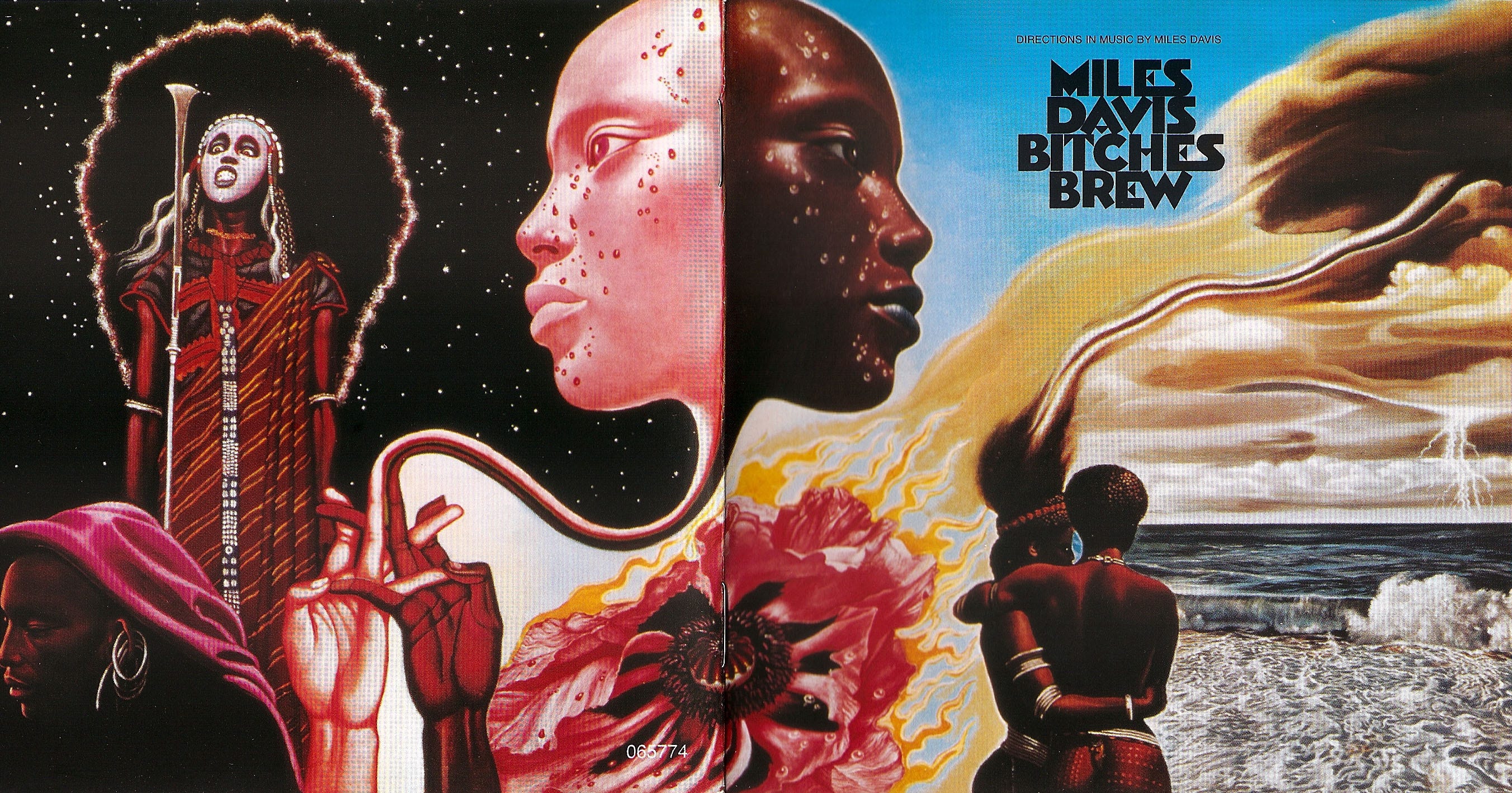
Is there anyone who embodies the interplay of major and minor more than Miles Davis? He seemed to thrive in the ambiguity that these sounds create. He was not just aware of, but reveling in his light/dark duality. He titled tunes and albums like Live/Evil, Selim, Sivad, and Double Image. The album art of Bitches Brew might as well be a visual representation of major/minor.
Gil Evans was happy to provide Miles with plenty of lovely minor-major to explore in his neo-impressionist arrangements and compositions. Consider the opening of Solea from Sketches of Spain (1960). Miles opens with a major triad, and the orchestra responds with a lush chord made from a phrygian scale (with a minor third). Or “Teo” from Someday my Prince Will Come (1961). It’s a mash up of the flamenco harmony of Sketches of Spain with the dorian modes of “Kind of Blue”. The dominant 7th chords are overlaid with phrygian minor scales. There is a relationship between major and minor harmony Miles explores during this period and the music of Eastern European Roma musicians like Boban Markovic - flamenco was created by Roma musicians as well, incorporating musical ideas from Spain, North Africa and their own traditions. (Miles was apparently a fan of Serbian brass playing.)
By the late 60s, Miles’s gravitation to major/minor coincided with the wave of rock and roll. The Beatles, Hendrix and Sly Stone were all about major/minor, so Miles’s band was too. Miles needed to move away from harmony based on 2/5s of Tin Pan Alley and towards something more primal and more ambiguous.
On “Miles in the Sky” (1968), the very first sound on the record is Herbie Hancock’s #9 chord on the Rhodes. There it is again at the beginning of Paraphanalia, Petits Machins, and Splash.
Shhh/Peaceful, from In a Silent Way (1969) is a meditation on major/minor. Miles’s solo ruminates on those two thirds, going back and forth, probing the difference between them.
For Bitches Brew (rec 1969) Miles was again looking for new ways of organizing melody and harmony. He told Chick Corea to play three triads, C, E, and Ab, which combined, and played over a C bass, create a scale that includes both the major and minor thirds of C. Many of the tracks have major and minor elements.
For the months leading up the recording session his band had been playing “Miles Runs the Voodoo Down”. After the record came out he would play it for about a year. The tune underwent several iterations, faster, slower, with different baselines, drum beats, and even different sections, but every one featured Miles, towards the beginning, playing a loose melody. It resembles a warped, psychedelic version of “Don’t Get Around Much Anymore”, or maybe a sort of descending trumpet fanfare.
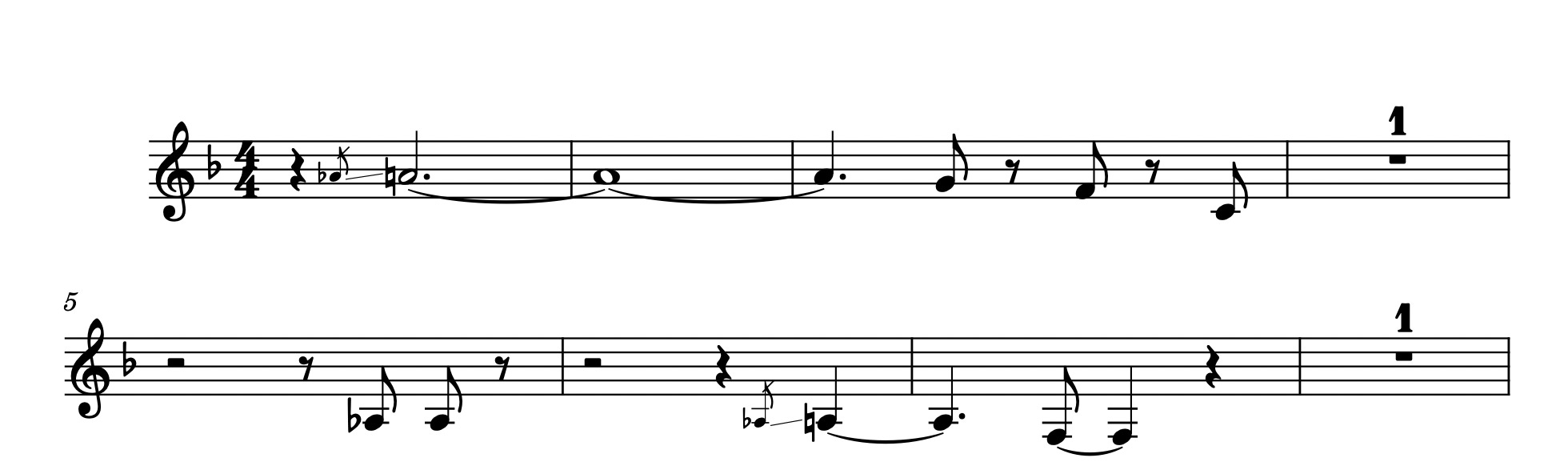
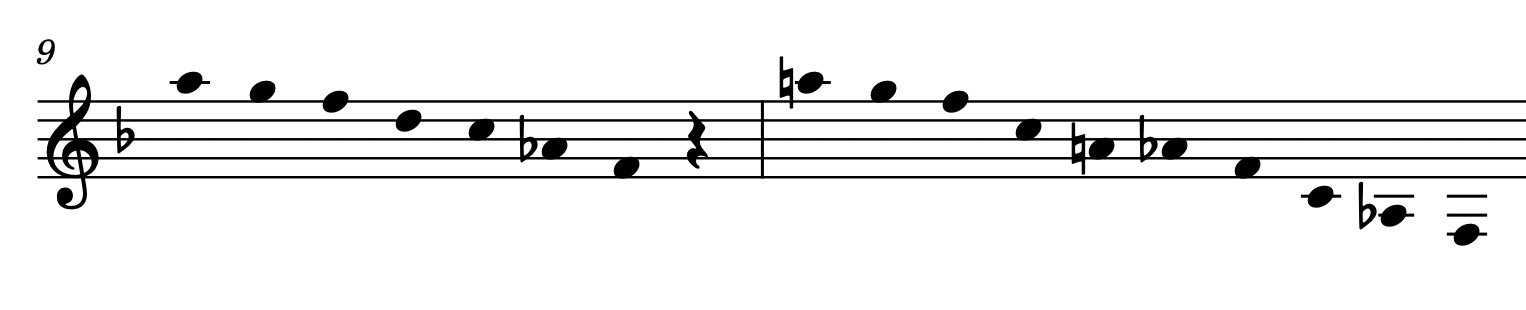
Comparing different versions, and there are many, is illustrative. It doesn’t resemble a “tune” as much as it does a rag or a maqam - a set of notes that’s more than a scale but leaves room for improvisation. There seem to be rules about direction, intention, and emphasis, but not rhythm or sequence. Sometimes it has more notes, or different octaves.
It always seems to start on a middle or high A natural and it always seems to have a low Ab.
In 1948 Gil Evans arranged Moon Dreams for Miles. After a lovely arrangement of the melody it ends with a sort of tortured classical fantasia full of repeated notes which evoke hooting owls. Miles sits on a dissonant b6 while the horns sustain uncertain harmony, obscured by a descending bass line. Played by bari sax and bowed bass, the line passes by the minor third before eventually settling on the root, revealing the chord above to be a major triad. Miles resolves to the fifth. Major vs minor but major wins. A cloudy night turns clear, revealing a shining moon.
Addenda: Maestro Brian Krock pointed me to this fantastic conversation between Ravel and Stravinsky, explicitly hashing out the differences between Igor and the impressionists when it comes to major and minor combos!
From the book Stravinsky by Stephen Walsh
They (Stravinsky and Ravel) were intrigued by Schoenberg’s way of combining major and minor chords (in Pierrot Lunaire), which Ravel thought perfectly acceptable “provided the minor third is at the top and the major at the bottom.” “But if you can do it that way round,” Stravinsky said, “I don’t see why you can’t do the reverse; and if I want to, I can.” He may have mentioned — may even have demonstrated — how he had already combined major and minor in the same register in Zvezdolikiy and The Rite of Spring, the harshest possible version of this color clash. The Japanese Lyrics, however, confine themselves to Ravel’s approved layout.
what a great post...thank you.
Great article